
Tough high-temperature polymer
PC

PC: High toughness, load capability and thermal headroom for demanding engineering parts.

Polycarbonate is selected where impact energy, vibration and elevated temperature exceed the comfortable range of PETG or ASA. PC combines a 117°C heat-deflection temperature with strong impact behaviour for protective structures and demanding functional parts.

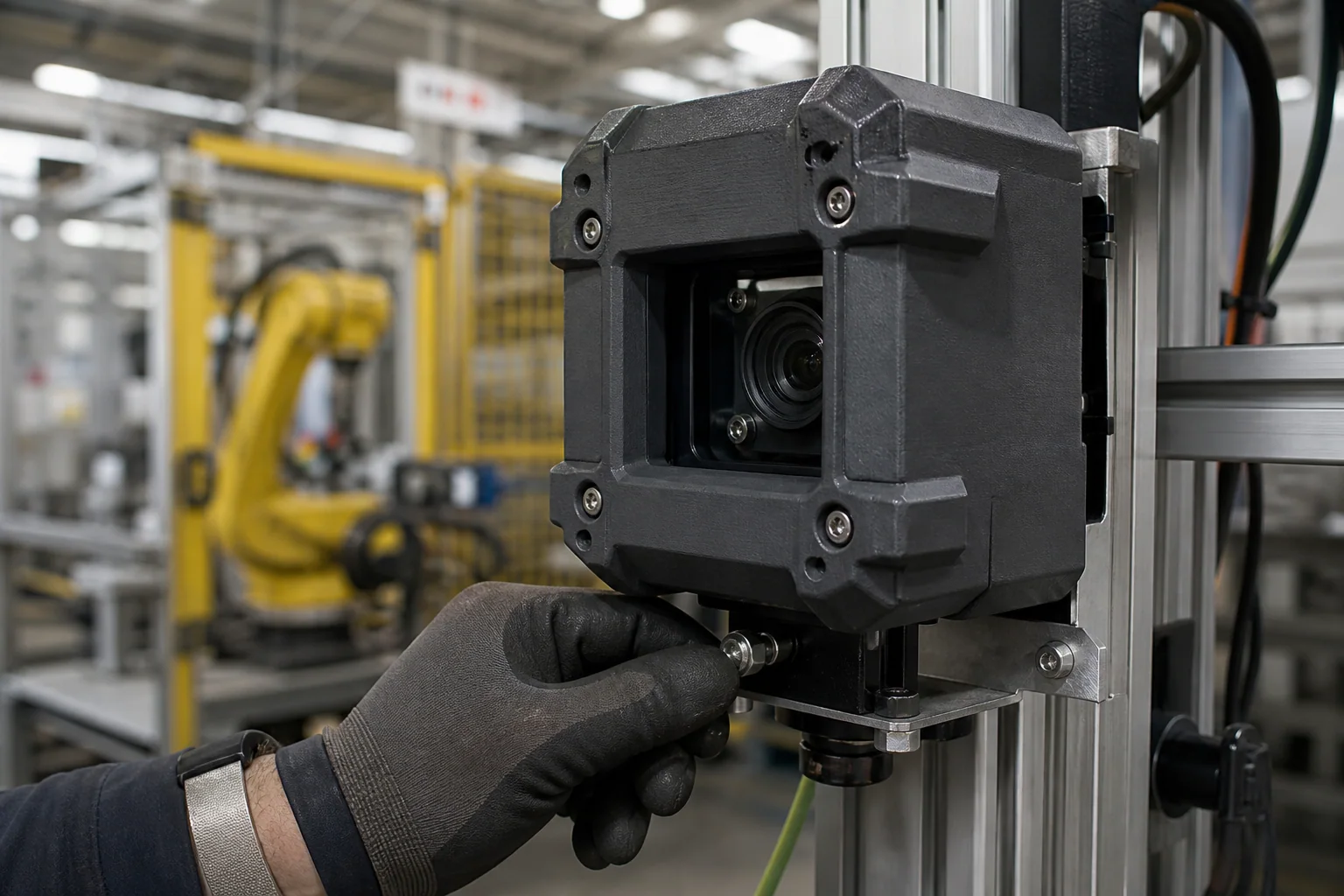
Polycarbonate printed protective housing around a machine-vision camera in an automation cell
Representative applicationImpact-tolerant machine-vision protection in an automation cell

The engineer’s read.

Material family names are not specifications. This page anchors the discussion to a named commercial grade and published printed-specimen data, then translates that data into practical selection and design guidance.

What it brings

Polycarbonate is selected where impact energy, vibration and elevated temperature exceed the comfortable range of PETG or ASA. PC combines a 117°C heat-deflection temperature with strong impact behaviour for protective structures and demanding functional parts.

Selection verdict

Choose PC for tough, heat-resistant parts that must survive impact and cyclic handling.

Printed properties.

Orientation, conditioning and geometry can move finished-part performance materially. Use these figures to compare candidate materials—not as guaranteed minimums.

PropertyRepresentative valueTest / context
Density1.20 g/cm³Manufacturer TDS
Tensile strength55 ± 4 MPaManufacturer TDS
Elongation at break3.8 ± 0.3%Manufacturer TDS
Flexural modulus · XY2.31 ± 0.07 GPaManufacturer TDS
Flexural strength · XY108 ± 4 MPaManufacturer TDS
Impact strength · XY34.8 ± 2.1 kJ/m²Manufacturer TDS
HDT · 0.45 MPa117°CISO 75
Vicat softening119°CISO 306

XY values normally represent flat-printed specimens. Z-direction strength can be substantially lower. Final production settings should be qualified on representative geometry.

Selection logic.

A useful material choice starts with load case, temperature, environment, duty cycle and failure consequence—not the strongest number on a datasheet.

Advantages

  • Excellent impact and vibration tolerance
  • Useful thermal performance above commodity polymers
  • Good electrical insulation in suitable grades
  • Strong interlayer integrity in qualified production parts

Watch-outs

  • Dimensional accuracy on large, highly constrained geometry needs qualification
  • Sensitive to some solvents, strong acids and strong alkalis
  • Lower stiffness than carbon-fibre structural composites

Strong applications

Protective housingsLoad-bearing bracketsHot-workshop fixturesElectrical enclosuresRobotics componentsImpact-exposed prototypes