
Extreme-environment carbon composite
PPS-CF

PPS-CF: Exceptional heat, chemical and dimensional stability for severe industrial environments.

PPS-CF is selected less for headline room-temperature tensile strength and more for its systems behaviour: exceptional thermal stability, low moisture uptake, broad chemical resistance, inherent flame performance in suitable grades and extremely low creep.

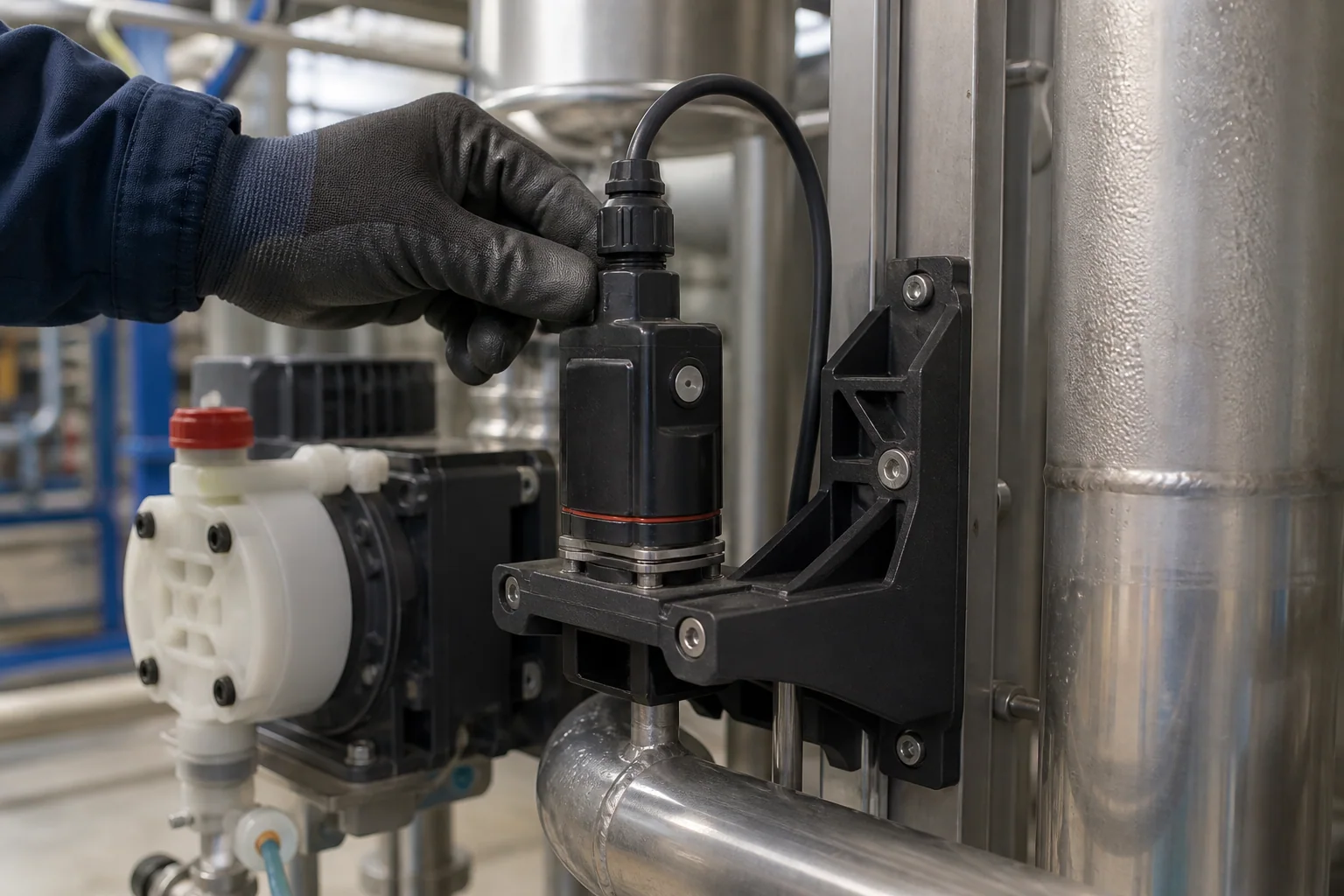
PPS-CF printed sensor mounting bracket installed beside stainless process pipework
Representative applicationChemical-resistant sensor support in process equipment

The engineer’s read.

Material family names are not specifications. This page anchors the discussion to a named commercial grade and published printed-specimen data, then translates that data into practical selection and design guidance.

What it brings

PPS-CF is selected less for headline room-temperature tensile strength and more for its systems behaviour: exceptional thermal stability, low moisture uptake, broad chemical resistance, inherent flame performance in suitable grades and extremely low creep.

Selection verdict

Choose PPS-CF when heat, solvents, fuels, flame behaviour or dimensional stability dominate the requirement.

Printed properties.

Orientation, conditioning and geometry can move finished-part performance materially. Use these figures to compare candidate materials—not as guaranteed minimums.

PropertyRepresentative valueTest / context
Density1.26 g/cm³Manufacturer TDS
Tensile strength · dry87 ± 5 MPaManufacturer TDS
Elongation at break · dry1.2 ± 0.4%Manufacturer TDS
Flexural modulus · XY dry7.16 ± 0.28 GPaManufacturer TDS
Flexural strength · XY dry142 ± 5 MPaManufacturer TDS
Impact strength · XY27.8 ± 2.3 kJ/m²Manufacturer TDS
HDT · 0.45 MPa264°CISO 75
Vicat softening268°CISO 306

XY values normally represent flat-printed specimens. Z-direction strength can be substantially lower. Final production settings should be qualified on representative geometry.

Selection logic.

A useful material choice starts with load case, temperature, environment, duty cycle and failure consequence—not the strongest number on a datasheet.

Advantages

  • Exceptional heat deflection and thermal ageing resistance
  • Very low moisture sensitivity
  • Broad resistance to fuels, oils, acids, alkalis and solvents
  • Excellent creep and dimensional stability

Watch-outs

  • Very low elongation; notch sensitivity and brittleness must be designed around
  • Premium material whose value depends on severe heat or chemical requirements
  • Chemical compatibility still requires grade-specific exposure testing

Strong applications

Hot-zone fixturesChemical-processing aidsElectrical componentsAutomotive fluid-system partsAerospace toolingPrecision moulding aids