
Active-foaming flexible elastomer
TPU Air

TPU-AIR: Temperature-tunable density and softness for lightweight cushioning and damping.

TPU Air is a lightweight elastomer system whose finished density and apparent hardness can be tailored from a denser 92A-like response to a light, foam-like 55A response. It is suited to cushioning, damping and ergonomic interfaces where mass and compliance matter.

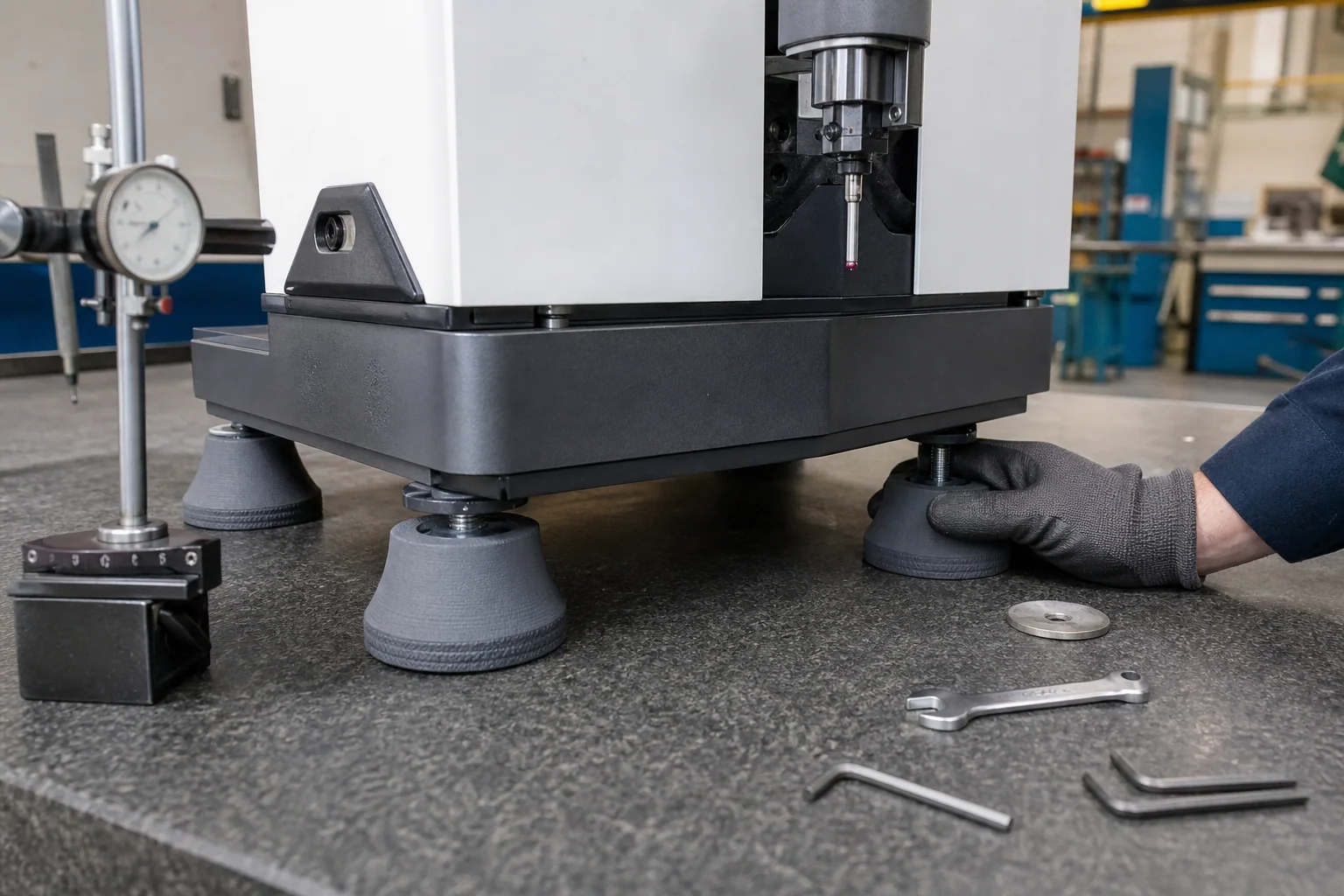
Foamed TPU Air printed vibration isolators installed beneath precision metrology equipment
Representative applicationLightweight vibration isolation beneath sensitive equipment

The engineer’s read.

Material family names are not specifications. This page anchors the discussion to a named commercial grade and published printed-specimen data, then translates that data into practical selection and design guidance.

What it brings

TPU Air is a lightweight elastomer system whose finished density and apparent hardness can be tailored from a denser 92A-like response to a light, foam-like 55A response. It is suited to cushioning, damping and ergonomic interfaces where mass and compliance matter.

Selection verdict

Choose TPU Air for low-density cushioning and tunable compliance—not for untested structural loads.

Printed properties.

Orientation, conditioning and geometry can move finished-part performance materially. Use these figures to compare candidate materials—not as guaranteed minimums.

PropertyRepresentative valueTest / context
Representative finished density0.7–0.9 g/cm³Application-dependent
Dense-state hardness≈92AManufacturer reference
Low-density hardness≈55AManufacturer reference
Potential weight savingUp to ≈50%Compared with dense TPU
Relative volume increase≈1.4–1.6×Manufacturer reference
Mechanical allowablesApplication testing requiredGeometry and density dependent

XY values normally represent flat-printed specimens. Z-direction strength can be substantially lower. Final production settings should be qualified on representative geometry.

Selection logic.

A useful material choice starts with load case, temperature, environment, duty cycle and failure consequence—not the strongest number on a datasheet.

Advantages

  • Up to roughly half the density of solid TPU in tuned processes
  • Hardness and cushioning can vary within one material system
  • Excellent energy absorption and soft-touch potential
  • Lightweight parts without complex internal lattices

Watch-outs

  • Final properties vary with specified density, hardness and geometry
  • Lower dimensional precision than solid engineering polymers
  • Not suitable for safety-critical load claims without application-specific testing

Strong applications

Cushioning padsVibration isolatorsProtective interfacesWearable paddingSoft robotic componentsLightweight grips and saddles